In the defense industry, no marketing budget competes with a battlefield result. South Korea's Cheongung-II (M-SAM 2) missile defense system just got the most compelling product demonstration money can't buy.
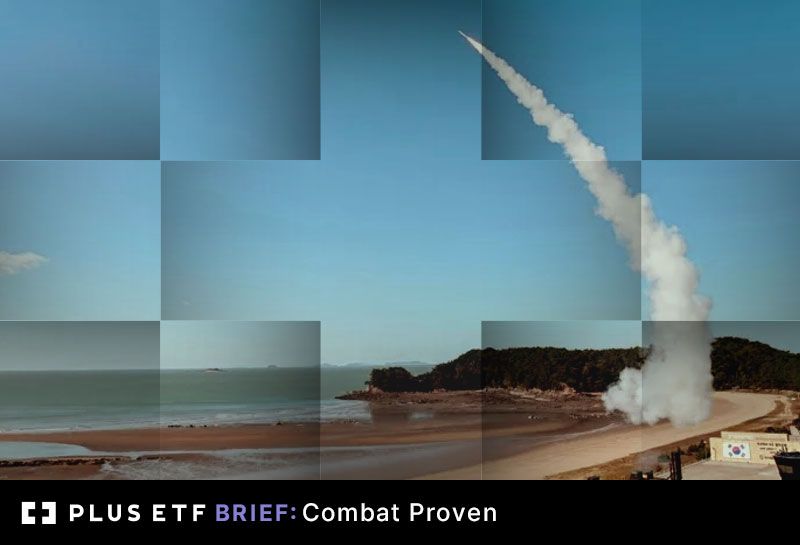 During Iran's ballistic missile and drone campaign against the United Arab Emirates in early March 2026, the Cheongung-II intercepted 29 of 30 assigned aerial targets - a reported 96% interception rate achieved under live combat conditions.¹ South Korean lawmaker Yu Yong-weon, a member of the National Defense Committee, confirmed that two deployed batteries accomplished this while firing roughly 60 interceptors.¹ The system, developed by LIG Nex1 with radar systems from Hanwha Systems and launchers from Hanwha Aerospace, employs hit-to-kill technology designed to neutralize ballistic missiles in their terminal phase.² That performance, achieved by a platform that only two years ago many analysts considered unproven, has fundamentally changed how Gulf defense planners view South Korean air defense.
The commercial implications were immediate. The UAE, which signed a landmark $3.5 billion contract in 2022 for ten Cheongung-II batteries (at the time South Korea's largest single weapons export deal), had only two batteries operational when the attacks began.³ Abu Dhabi responded by requesting emergency delivery of interceptor missiles and accelerating the delivery schedule for its remaining eight batteries.⁴ South Korea dispatched C-17 strategic transport aircraft to rush interceptors from its own military reserves, a logistical decision that signaled Seoul's willingness to absorb short-term domestic inventory risk to protect a strategic partner.⁴
The ripple effects extend across the Gulf. Saudi Arabia finalized a separate $3.2 billion deal for ten Cheongung-II systems in early 2025.⁵ Iraq is in advanced negotiations for a potential $2.6 billion procurement of eight batteries.⁶ Combined, the three Middle East deals represent more than $9 billion in committed or near-committed contracts and that was before the UAE combat debut rewrote the system's credibility profile.
For investors, we believe that the opportunity sits squarely inside The Plus Korea Defense Industry Index ETF (KDEF). The fund’s index tracks South Korean defense companies, with Hanwha Aerospace, LIG Nex1, Hyundai Rotem, KAI, and Hanwha Systems among its largest weights (as of 4/8/26).⁷ KDEF gained approximately 165% over its first year of trading as of February 28, 2026, versus 31% for the industrials category.⁸ For standardized performance, click here: https://www.plusetf.com/kdef#performance
The performance data quoted represents past performance and is no guarantee of future results. Investment return and principal value of an investment will fluctuate so that an investor's shares, when redeemed, may be worth more or less than their original cost. Current performance may be lower or higher than the performance data quoted. For the most recent month-end performance, please call 1-855-900-0030 or visit the Fund’s website at plusetf.com. The Fund’s gross expense ratio is 0.65%%.
The broader structural story reinforces the position. South Korea's defense exports rebounded to $15.4 billion in 2025, a 60% year-over-year surge, driven by landmark deals across the Middle East and Europe.⁹ The country's "Big Four" defense firms (Hanwha Aerospace, Hyundai Rotem, LIG Nex1, and KAI) posted all-time high combined revenues of 40.45 trillion won in 2025, with operating profit margins more than doubling across the group.⁹ Their combined order backlog exceeded 100 trillion won by mid-2025, providing multi-year revenue visibility.¹⁰
What makes the Cheongung-II story particularly compelling is the price point. A single interceptor missile costs approximately $1.1 million - roughly one-third the price of a comparable Patriot missile.⁶ In a region where Gulf nations are contending with sustained Iranian drone and missile pressure, we believe the combination of combat-proven performance and cost efficiency is a powerful procurement argument.
The combat debut of the M-SAM 2 didn't just validate a weapons system. It validated a thesis: that South Korea has built a defense industrial base capable of competing at the highest levels of global arms exports and that KDEF seeks to offer a direct way to participate in that story.
Sources:
[1] Cheongung-II (KM-SAM Block II) Destroys 29 of 30 Iranian Missiles in UAE Combat Debut, Triggering Global Rush for South Korea's Air-Defense System." Defence Security Asia, April 5, 2026.
[2] Hanwha Aerospace Offers Next-Generation Air Defense Systems to the Middle East at IDEX 2025." Army Recognition, February 18, 2025.
[3] The New South Korean M-SAM II Air Defense System Recorded Its Combat Debut with the Interception of Iranian Ballistic Missiles. Zona Militar, April 1, 2026.
[4] South Korea Rushes Cheongung-II Missile Interceptors to UAE as Iranian Missile Threat Forces Emergency Air Defence Reinforcement." Defence Security Asia, March 11, 2026.
[5] Saudi Arabia Purchased South Korea's Cheongung-II Anti-Air Missiles for $3.2 Billion." Global Defense Corp, March 3, 2025.
[6] S.Korea's LIG Nex1, Iraq Set for $2.6 Billion Deal on M-SAM Missile System. KED Global, September 12, 2024
[7] Record Profits, Strong Exports: Why Korean Defense Giants' 2025 Earnings Matter. Plus ETF, October 2025.
[8] PLUS Korea Defense Industry Index ETF (KDEF) Performance History." Yahoo Finance, accessed April 8, 2026.
[9] Korea's Defense Exports Hit $15.4 Billion in 2025, Set to Grow Further. Seoul Economic Daily, March 24, 2026.
[10] South Korea's Defense Giants to Hit US$28 Billion in 2025 Sales. Mexico Business News, October 2, 2025.
Investors should consider the investment objectives, risks, charges and expenses carefully before investing. For a prospectus or summary prospectus with this and other information about the Fund, please call 1-855-900-0030 or visit our website at www.plusetf.com. Read the prospectus or summary prospectus carefully before investing.
Holdings are subject to change. For current holdings go to www.plusetf.com.
The Fund is distributed by Foreside Fund Services, LLC and Exchange Traded Concepts, LLC serves as the investment advisor of the funds. Foreside Fund Services, LLC is not affiliated with Exchange Traded Concepts, LLC or any of its affiliates.
Risk Disclosures:
Investing involves risk, including possible loss of principal. There is no guarantee the Fund will achieve their stated objectives. In addition to the normal risks associated with investing, international investments may involve the risk of capital loss from unfavorable fluctuation in currency values, differences in generally accepted accounting principles or social, economic or political instability in other nations. Emerging markets involve heightened risks related to the same factors as well as increased volatility and lower trading volume. The Fund’s concentration in an industry or sector can increase the impact of, and potential losses associated with, the risks from investing in those industries/sectors.
The Fund’s concentration in a single country or a limited number of countries will increase the impact of, and potential losses associated with, the risks from investing in those countries.
The Fund is non-diversified. The Fund is new and has a limited operating history for investors to evaluate. A new and smaller fund may not attract sufficient assets to achieve investment and trading efficiencies. In addition to the normal risks associated with investing, investments in smaller companies typically exhibit higher volatility.
The Fund may invest in securities denominated in foreign currencies. Because the Fund's NAV is determined in U.S. dollars, the Fund's NAV could decline if currencies of the underlying securities depreciate against the U.S. dollar or if there are delays or limits on repatriation of such currencies. Currency exchange rates can be very volatile and can change quickly and unpredictably.
The Fund is a recently organized investment company with no operating history. As a result, prospective investors have no track record or history on which to base their investment decision. Moreover, investors will not be able to evaluate the Fund against one or more comparable funds on the basis of relative performance until the Funds has established a track record.
One basis point (bps) is equivalent to 0.01%.


